RoboMaster Sentry Robot System
Led the HITSZ Critical-HIT Sentry Robot group for RoboMaster, developing an autonomous competition robot subsystem with embedded control, target detection-tracking, and field-oriented reliability.
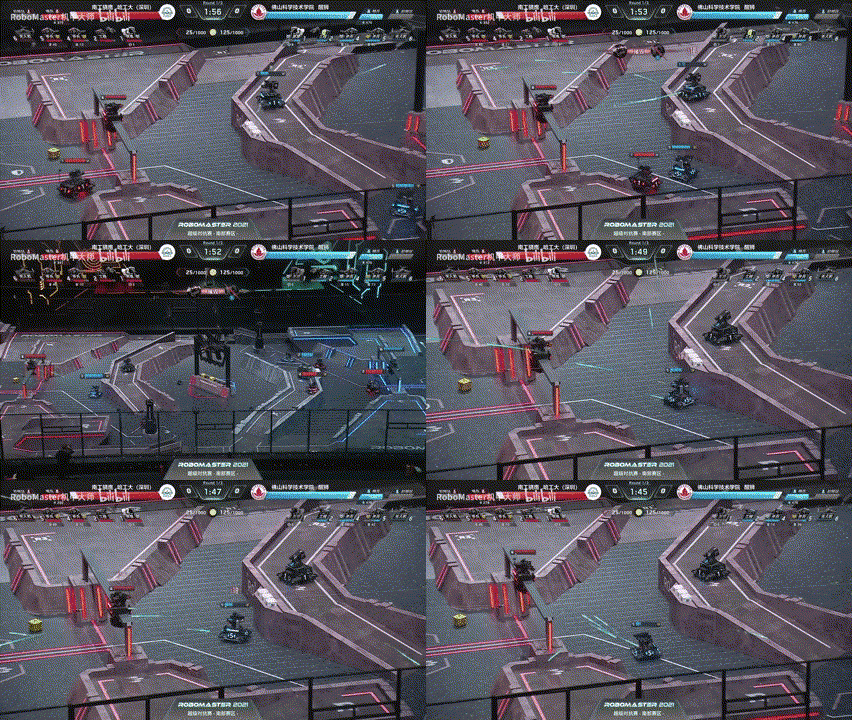
Overview
Led the HITSZ Critical-HIT Sentry Robot group for RoboMaster, developing an autonomous competition robot subsystem with embedded control, target detection-tracking, and field-oriented reliability.
Details
Competition Robotics Context
From October 2020 to August 2022, I led the Sentry Robot Group in the HITSZ Critical-HIT RoboMaster team. RoboMaster is a robotics competition where autonomous perception, embedded control, mechanism design, and field reliability have to work together under fast-changing arena conditions.
For the sentry role, the robot needed to patrol or hold position, observe the arena, respond to targets, and remain reliable under the constraints of a compact mobile platform. The project was not only about making a detector run; it was about turning perception, actuation, and robot behavior into a competition-ready subsystem.
Autonomous Sentry Subsystem
The group developed a fully automatic sentry robot subsystem for competition deployment. My work focused on embedded-system responsibility and the target-aiming framework, including detection, tracking, and the system behavior needed to connect perception output to robot response.
The technical challenge was the integration boundary: perception had to be fast enough for competition use, control had to be stable enough for a moving platform, and the subsystem had to remain maintainable during repeated testing and competition preparation.
Team Leadership and Results
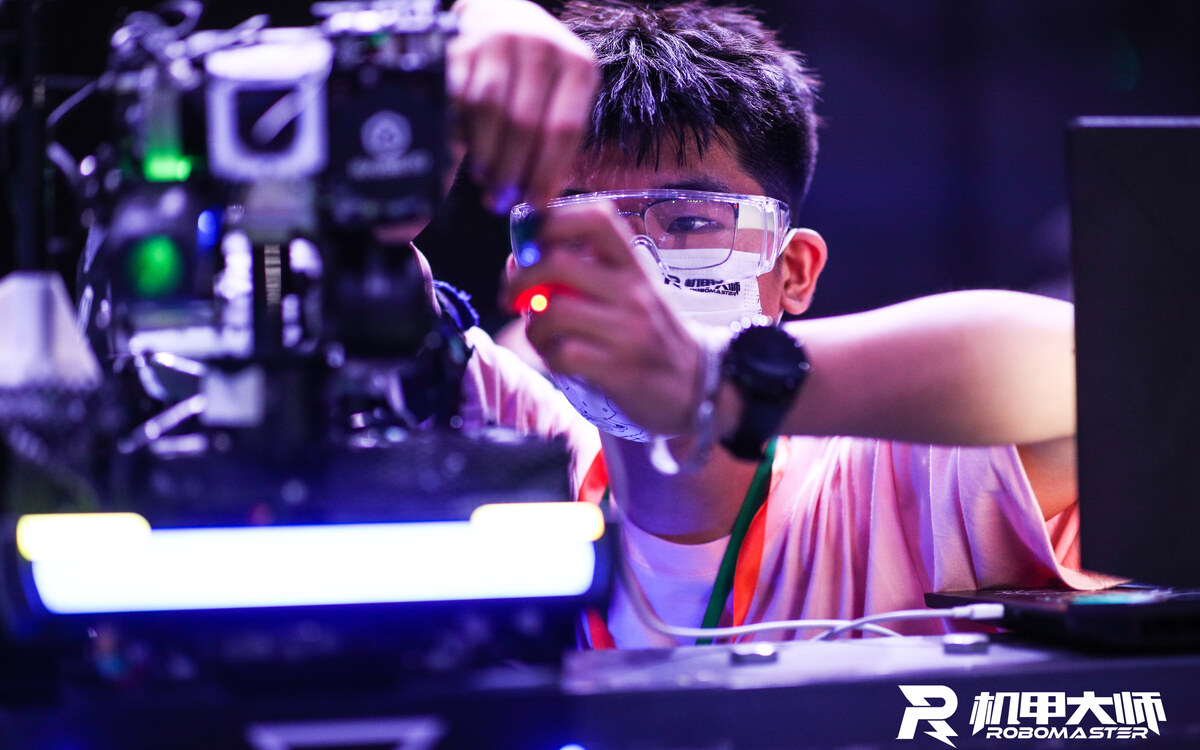
As group leader, I coordinated task allocation across team members, reviewed subsystem progress, and kept the sentry work aligned with the whole robot team. The broader HITSZ Critical-HIT team received First Prize in the RoboMaster University Championship in both 2021 and 2022.
This project was an early engineering foundation for my later robotics work. It made the connection between real-time perception, embedded systems, field testing, and team-level system delivery much more concrete than a standalone algorithm project.